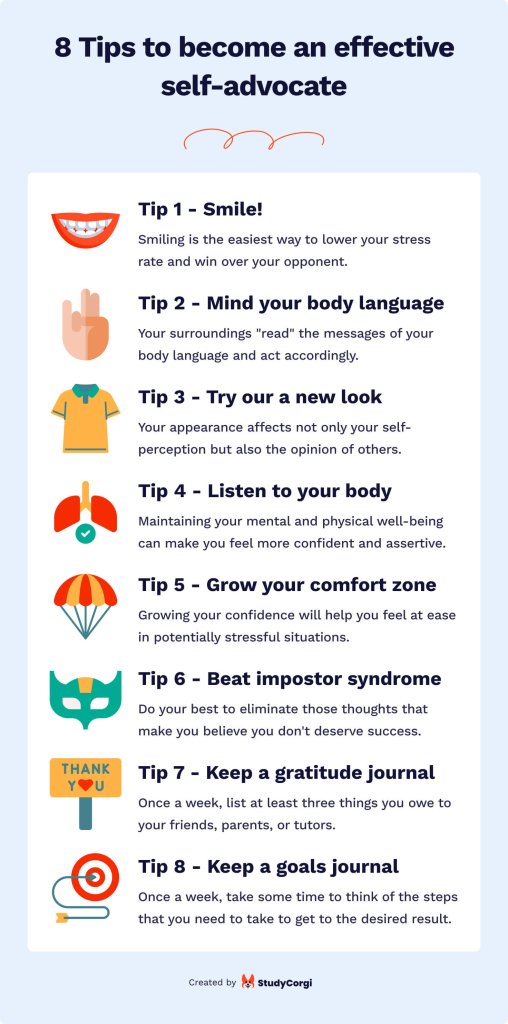
When you consistently find yourself unheard, your contributions overlooked, or your needs unmet, it’s not just frustrating—it’s often a clear signal that it’s time to intentionally develop your Strategies for Self-Advocacy & Visibility. Many of us are taught to be humble, to wait our turn, or to assume our good work will simply speak for itself. But in a world that moves fast and values clear communication, silence can inadvertently lead to being sidelined, taken for granted, or feeling used. Learning to effectively champion your own voice, needs, and accomplishments isn’t just about ego; it’s about respect, growth, and ensuring your unique value is recognized.
At a glance: Your Roadmap to Being Seen and Heard
- Self-advocacy means standing up for your needs, ensuring your voice is acknowledged, and setting clear boundaries.
- Professional visibility in the workplace is about being known for your contributions and the value you bring.
- Empowerment and respect are core benefits, fostering healthier relationships and boosting confidence.
- Build confidence by knowing your worth, educating yourself, visualizing success, and practicing assertiveness.
- Set clear boundaries by identifying needs, communicating them directly, and being consistent.
- Overcome fear by acknowledging it, challenging negative thoughts, preparing, and seeking support.
- Handle conflict with calm, active listening, "I" statements, and knowing when to disengage.
- Boost career growth by reframing self-advocacy as "career hygiene" and authentically sharing your impact.
- Create sustainable habits by regularly tracking accomplishments and scheduling dedicated visibility time.
The Unspoken Power: Why Self-Advocacy Isn't Optional Anymore
At its heart, self-advocacy is the conscious act of standing up for yourself. It’s about clearly articulating your needs and wants, ensuring your voice holds weight, and drawing respectful boundaries. Many individuals, hoping to maintain peace or avoid confrontation, will stay silent. Yet, this often leads to their opinions being dismissed and their needs ignored, leaving them feeling used or taken for granted. This isn't just a personal failing; it's a systemic challenge, especially for disenfranchised populations like women, minorities, or people with health conditions, who research shows may be more prone to mistreatment and less likely to advocate for themselves.
Alongside personal self-advocacy, professional visibility is its crucial counterpart in the workplace. It means being seen, heard, and genuinely known for the value you bring. Your contributions need to be recognized not just by your immediate team, but by leadership and key decision-makers, actively shaping your personal brand.
The Profound Benefits of Stepping Up
Choosing to advocate for yourself unlocks a cascade of positive outcomes, extending far beyond the immediate situation:
- Empowerment: You gain the agency to voice your true needs and beliefs, rather than silently enduring.
- Fosters Respect: You effectively teach others how to treat you, setting a higher standard for your interactions.
- Improves Communication: Your needs are stated clearly and assertively, reducing misunderstandings.
- Encourages Healthy Boundaries: You establish and maintain clear limits in all your relationships, personal and professional.
- Builds Confidence: Each successful act of self-advocacy acts as a building block for your self-esteem.
- Prevents Resentment: You avoid bottling up frustrations that arise when your needs are consistently overlooked.
- Reduces Stress: You prevent the extra effort and emotional toll that comes from trying to cope when your core needs aren't met.
These aren't just abstract ideas; they're tangible shifts that transform your daily experience, making you a more effective and fulfilled individual.
Building Your Inner Strength: Foundations of Self-Confidence
Self-advocacy requires a bedrock of self-confidence. If you don't believe in your right to speak up, it becomes infinitely harder to do so. Luckily, confidence isn't an innate trait; it's a skill you can cultivate with deliberate practice.
Know Your Value and Own Your Strengths
Start by recognizing your inherent worth. Take inventory of your unique skills, talents, and achievements. What contributions have you made, big or small? What positive feedback have you received? This isn't about bragging; it's about soberly assessing your assets. When you're grounded in your value, advocating for yourself feels less like demanding and more like stating a fact.
Educate and Empower Yourself
Knowledge is power, especially in advocacy. Before entering a situation where you need to speak up, arm yourself with information. Understand your rights, research the topic at hand, or gather relevant data. When you're well-informed, your arguments become more persuasive, and your resolve strengthens. This preparation can dramatically reduce the anxiety of the unknown.
Visualize Success and Affirm Your Power
Before a challenging conversation, take a few moments to visualize yourself confidently advocating for your needs, and imagine the positive outcomes. See yourself speaking clearly, being heard, and achieving a favorable resolution. Couple this with positive self-talk. Use affirmations like, "I am capable of expressing my needs clearly," or "My voice deserves to be heard." These mental rehearsals prime your brain for success.
Practice Makes Progress: Start Small
Assertiveness, like any skill, improves with practice. Don't wait for a high-stakes moment to try it out. Start by expressing your thoughts or needs calmly in smaller, lower-stakes situations. Perhaps it's choosing a restaurant with friends, voicing a preference at a family gathering, or asking for clarification on a minor work task. Each successful small step builds confidence for larger challenges. Reflect on past successes, no matter how minor, where you effectively advocated for yourself. What worked? How did it feel? Use these memories as fuel. Even setbacks are valuable learning opportunities, not failures.
Drawing the Line: Mastering Healthy Boundaries
One of the most powerful forms of self-advocacy is setting and maintaining healthy boundaries. Boundaries define what you are and aren't comfortable with, communicating how you expect to be treated. Without them, you risk burnout, resentment, and relationships that consistently drain you.
Understanding Your Needs and Limits
Before you can communicate a boundary, you need to understand it yourself. Take time to identify what truly matters to you in your relationships and what you require to feel respected and comfortable. What situations make you feel uncomfortable, overwhelmed, or resentful? Journaling can be an excellent tool here, allowing you to reflect on past interactions and pinpoint your triggers and desires.
Communicating Clearly: Direct, Assertive, Respectful
Once you know your boundaries, articulate them using direct, clear, and assertive language. Crucially, do so respectfully, focusing on your needs without blaming the other person. Instead of "You always dump your problems on me," try: "I need to set a boundary around how much emotional support I can offer after hours, as I need that time to recharge." Or, a common one: "I would appreciate it if you check with me first before making plans for us." This approach frames your boundary as a personal need, not an accusation.
The Power of Consistency and Learning to Say "No"
Setting a boundary is just the first step; maintaining it is where true self-advocacy shines. Be consistent. If you repeatedly allow a boundary to be crossed, it signals that your limits aren't firm. This means practicing the art of saying "no." Decline requests that genuinely aren't in your best interest or that infringe on your established limits. A simple, "No, I can't do that right now," or "No, that doesn't work for me," is often sufficient, without needing lengthy explanations.
Navigating Pushback and Embracing Evolution
It's natural to encounter pushback when you first set boundaries. Some people may be surprised, or even react negatively, especially if they've benefited from your lack of boundaries in the past. Remain calm. Gently but firmly reiterate your boundary and explain its importance to your well-being. Remember, those who truly care about you will respect your boundaries, even if it takes them a moment to adjust. Those who consistently disregard them may not have your best interests at heart, and that's a crucial insight.
Finally, understand that boundaries aren't static. As you grow and your relationships evolve, your needs may change. Be prepared to adjust your boundaries as needed, finding the right balance between advocating for yourself and respecting the needs of others.
Facing the Dragon: Overcoming Fear and Anxiety
The thought of speaking up can conjure significant fear and anxiety. Fear of rejection, fear of conflict, fear of judgment, or even the fear of success can hold us back. Acknowledging these emotions is the first step toward disarming them.
Acknowledge Your Worries, Name Your Fears
Don't pretend your fears don't exist. Instead, identify and name them. "I'm afraid they'll think I'm arrogant," or "I'm worried this will damage our relationship." By articulating these emotions, you gain a sense of control over them, rather than letting them control you.
Challenge Negative Narratives
Our minds often concoct worst-case scenarios. Challenge these negative thoughts. Remind yourself that you deserve kindness, fairness, and to have your needs met. Ask yourself: "Is this thought truly helpful, or is it holding me back?" Replace self-defeating narratives with empowering ones, using positive self-talk to feel stronger and more capable.
Preparation as a Shield
Fear often thrives in uncertainty. Combat this by preparing in advance. If you have an upcoming situation where you need to advocate, practice what you want to say. Jot down key points. Role-play with a trusted friend. This preparation doesn't guarantee perfection, but it builds confidence and reduces the likelihood of being caught off guard. When you know your material, you can focus on delivery.
Embracing Imperfection and Seeking Support
Self-advocacy is a skill, and like any skill, it improves with practice. It's perfectly okay to feel nervous, to stumble over your words, or to not get it "perfect" every time. Accept imperfections as part of the learning process. As Eleanor Roosevelt wisely stated, "You gain strength, courage, and confidence by every experience in which you really stop to look fear in the face. You must do the thing which you think you cannot do."
Don't go it alone. Discuss your fears and anxieties with trusted friends, family members, or a therapist. Sometimes, simply vocalizing your worries to a supportive ear can lighten the load and provide new perspectives.
When Waters Get Choppy: Handling Conflict and Difficult Conversations
Self-advocacy often places you squarely in the middle of a conflict or a difficult conversation. These moments can be uncomfortable, but they are also crucial opportunities to assert your voice and protect your well-being.
The Art of Staying Calm and Listening Actively
When conflict arises, your first instinct might be to react defensively. Instead, take a deep breath. Slow down. This pause allows you to think clearly and respond thoughtfully, rather than react impulsively. Then, listen actively. Give the other person the space to express their thoughts without interruption. Showing respect by truly listening can often diffuse tension and open the door for a more productive dialogue.
"I" Statements: Your Non-Blaming Ally
This is a cornerstone of effective conflict resolution. Frame your feelings and needs using "I" statements, which express your experience without placing blame. For example, instead of saying, "You never listen to me," which sounds accusatory, try, "I feel unheard when my opinions are dismissed." This shifts the focus to your internal experience, making the other person less likely to get defensive and more likely to hear your message.
Reiterating Boundaries and Finding Common Ground
In a heated moment, it’s vital to calmly restate your boundaries and explain their importance. Remind the other person of your limits, not as a threat, but as a necessary part of a healthy interaction. Look for areas of agreement or shared goals. Identifying common ground can transform a potential battleground into a space for collaboration and mutual resolution.
Negotiating, Seeking Understanding, and Knowing When to Disengage
Be open to negotiation and compromise. Self-advocacy doesn't mean always getting your way; it means ensuring your needs are part of the solution. Your aim should be mutual resolution and understanding, not "winning" an argument. Sometimes, despite your best efforts, a situation remains toxic or unproductive. Knowing when to disengage, to walk away for your well-being, is an act of powerful self-advocacy. If a conflict is particularly challenging and you're struggling to find a resolution, consider seeking mediation or support from a neutral third party.
Beyond the Shadows: Cultivating Professional Visibility for Career Growth
In today's fast-paced work environments, being a "silent achiever" is often a recipe for being overlooked. You might work incredibly hard, deliver outstanding results, but if those contributions aren't visible, they won't lead to recognition, promotions, or new opportunities. This isn't about bragging; it's about strategic communication.
The Myth of the "Silent Achiever"
Many of us are taught that our work should speak for itself. In an ideal world, perhaps it would. But in reality, with remote and hybrid work becoming the norm, and teams often stretched thin, leaders simply don't have the bandwidth to uncover every hidden gem. Unseen work is unrecognized work. This can lead to missed opportunities, stagnation, and the frustrating feeling that you're constantly pushing uphill.
Reframing Self-Advocacy: It's "Career Hygiene"
The idea of "self-promotion" can feel uncomfortable, even arrogant, to many. To overcome this aversion, reframe self-advocacy in your career as "career hygiene" or "strategic visibility." Think of it as part of your professional responsibility, not a boast.
Here’s why this reframing is essential:
- Your Work Has Impact: If your contributions aren't seen, their impact isn't recognized, especially in remote or hybrid settings where "out of sight, out of mind" can be a real problem.
- Sharing Wins Isn’t About Ego: It creates clarity for your team and leadership, shows where momentum is building, and helps align everyone on priorities.
- Reporting Progress, Not Greatness: The goal is honest, consistent sharing of your impact, not exaggerated storytelling. It’s about informing, not inflating.
Smart, Authentic Ways to Share Your Wins
Once you shift your mindset, the "how-to" becomes much clearer.
- Embed Wins into Regular Communication: Don't wait for a dedicated "win" session. Weave your accomplishments naturally into weekly updates, one-on-one meetings with your manager, or team Slack channels. Instead of just listing tasks, briefly mention: "Here’s what I’ve been focused on and the outcome."
- Use “We” Language Strategically: Acknowledge your team's contributions while clearly specifying your role. For example: "Together we landed X, and I led the strategy on Y, which helped us achieve Z." This balances humility with clarity about your specific impact.
- Contextualize Impact, Not Effort: People care about results. Instead of saying, "I created a new process," explain the impact: "I created a new process that improved efficiency and cut turnaround time by 40%." Quantify your achievements whenever possible.
- Document and Share Learnings: Turn your accomplishments into learning moments for others. Write a brief internal post, lead a "lunch-and-learn" session, or contribute to a team knowledge base about a successful project you led. This positions you as a valuable resource and thought leader.
- Let Others Amplify You: Share your successes with your manager, team members, and mentors, and encourage them to give shout-outs where appropriate. Reciprocal recognition is powerful. When you celebrate others, they're more likely to celebrate you.
Self-advocacy can sometimes feel like an uphill battle, especially if you've long been accustomed to staying in the background. If you've ever felt that disconnect, you might resonate with the experiences explored in Invisible Girl, a deep dive into feeling overlooked and the journey to reclaim your narrative. Understanding these underlying feelings can be a powerful first step in actively changing your approach to visibility.
Quick Scripts for Modest Individuals
If you struggle with how to phrase your achievements, here are some simple, authentic prompts:
- "One thing I’m proud of from this week is…"
- "I wanted to flag something that worked really well on the [project name]…"
- "I noticed [specific impact] from the project I led — might be useful for others too."
- "Quick win to share! The [initiative] resulted in [positive outcome]."
These scripts are conversational and focus on the impact or learning, making them less about self-aggrandizement and more about shared knowledge.
Building a Sustainable Visibility Habit
Visibility isn't a one-time event; it's an ongoing practice.
- Set Regular Check-ins: Schedule dedicated time weekly or monthly to reflect on your achievements. What did you accomplish? How did it align with your goals? What can you share?
- Track Your Accomplishments: Maintain a running list of your wins. Include metrics, positive quotes, and links to your work. This "brag book" is invaluable for performance reviews, professional profiles, and simply boosting your own morale.
- Schedule Face Time: Make sure you have recurring one-on-one meetings with your manager and other key stakeholders. Use these as intentional communication opportunities to discuss your progress and strategic contributions.
- Keep Iterating: Continuously assess what's working and what isn't in your visibility strategy. Refine your approach, try new methods, and adapt as your role and environment change. This iterative process ensures your visibility remains sustainable and continuously supports your growth.
Ultimately, self-advocacy is a learnable skill that strengthens your personal brand, empowers your growth, and ultimately benefits not just you, but your entire team through clearer communication and shared success.
Your Path Forward: Taking Action with Confidence
Embarking on the journey of self-advocacy and visibility isn't about transforming into someone you're not. It's about honoring who you are, recognizing your inherent worth, and communicating your needs and contributions with clarity and confidence. This isn't just about getting ahead; it's about living a life where you feel respected, heard, and genuinely valued.
Start small. Choose one strategy from this guide that resonates most deeply with you, whether it's setting a clear boundary in a personal relationship, practicing an "I" statement in a low-stakes conflict, or simply sharing a small win with your team. Implement it consistently for a week. Notice the subtle shifts, both in your interactions and in your own sense of empowerment. Each step, no matter how minor, builds momentum. You have a voice, and it deserves to be heard. It's time to let it resonate.